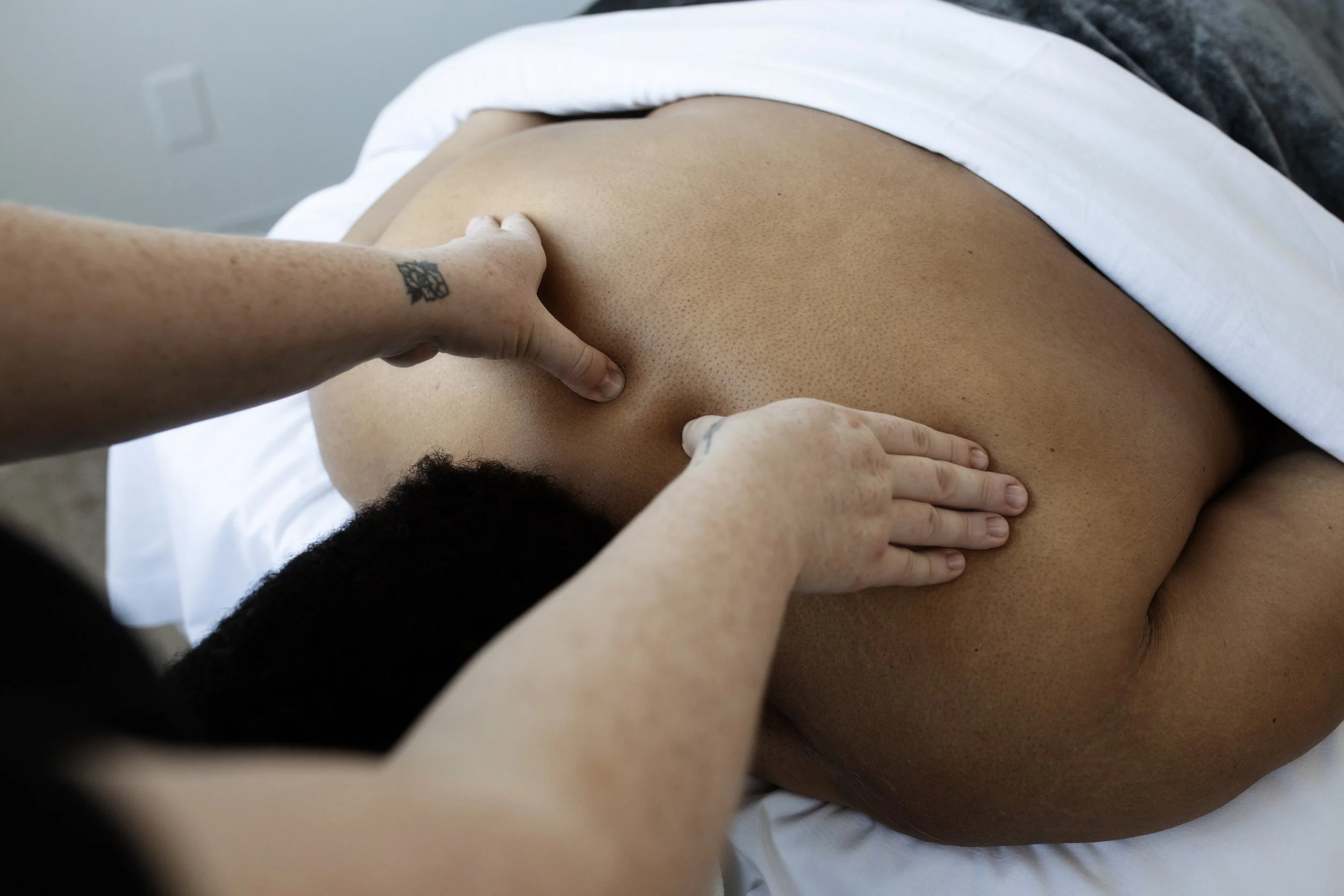
Massage therapy promotes transformation through gentle touch.
Our bodies have incredible healing potential when given the proper support and nourishment. Massage therapy provides just that.
What is massage therapy?
Massage therapy is a bodywork technique that uses sustained pressure, techniques like trigger point therapy, and slow, light or deep strokes to target the superficial layers and inner layers of muscles and fascia (connective tissue), depending on the depth and amount of pressure preferred by the person receiving the massage.
Massage therapy provides symptom relief, invites calm in the body, mind, and spirit, and creates a collaborative, gentle path to personal transformation and healing.
Massage therapy can be used on its own to address a health concern and support wellbeing, or combines beautifully with our other services for a comprehensive, integrative approach.
We strive to provide an affirming and tailored approach to massage for each client rooted in clinical research, transparency, trauma-informed healthcare practices, and inclusivity.
“I have ongoing chronic pain issues due to past medical treatments and changes due to aging. My back pain was lessened significantly in just one massage session. I immediately made a follow up massage appointment and I am optimistic that continuing massages with other services at Constellation will help me achieve a better quality of life. My chronic pain will not disappear but I believe it will be more manageable with the treatments I am receiving at Constellation.”
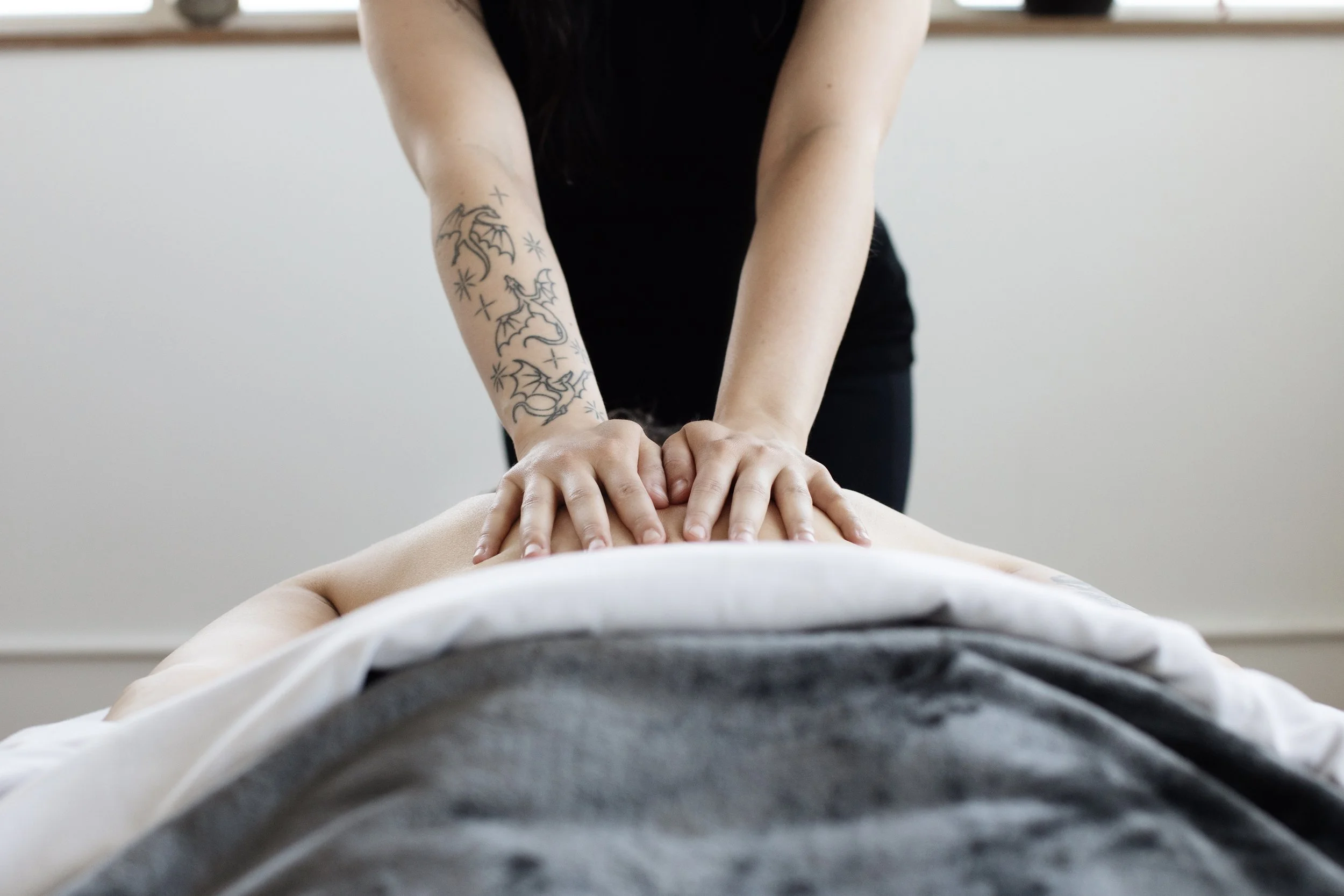
How massage therapy can help you live with less pain and tension:
Relaxes muscle and connective tissues to reduce pain, tension, and spasms
Increases flexibility and range of motion
Imparts softness, strength, and smoothness to the skin and body tissues
Promote healing of scar tissue from surgery or injury
Moves blood and lymph fluid
Reduces inflammation
Relieves stress and anxiety
Promotes healing of trauma
Calms the nervous system and strengthens resiliency
Great option for regular self-care and well-being
What to expect in a massage appointment:
We have a lot of different types of massage appointments to choose from, which will dictate the type of treatment you receive - see all of those options below!
Each appointment begins with a check-in with your practitioner: what’s going on for you, areas of the body you want focused on, what’s new since the last time you were in, etc. Then your practitioner will pop out of the room while you undress to the level of your comfort (which can also be discussed with your therapist) and get on the cozy massage table.
Once you’re ready, your practitioner will re-enter the room and use their skillset to tune into your body and provide care, checking in with pressure levels as they go. Massage oil or lotion is used to help provide movement, slide, and suction (if using cups) of the tissue.
A note on conversation during massage sessions:
We want your massage to be an enjoyable experience for you! And, we understand that conversation during massage is a personal preference.
If you prefer a mostly silent service, please let your massage therapist know that you prefer to limit conversation only to topics relevant to providing care, and/or to turn off any music or ask for a quiet room.
If you prefer to have light conversation during your session, let your massage therapist know you enjoy talking during massage and what topics you'd like to discuss.
We welcome your feedback so you can have the best bodywork experience possible!
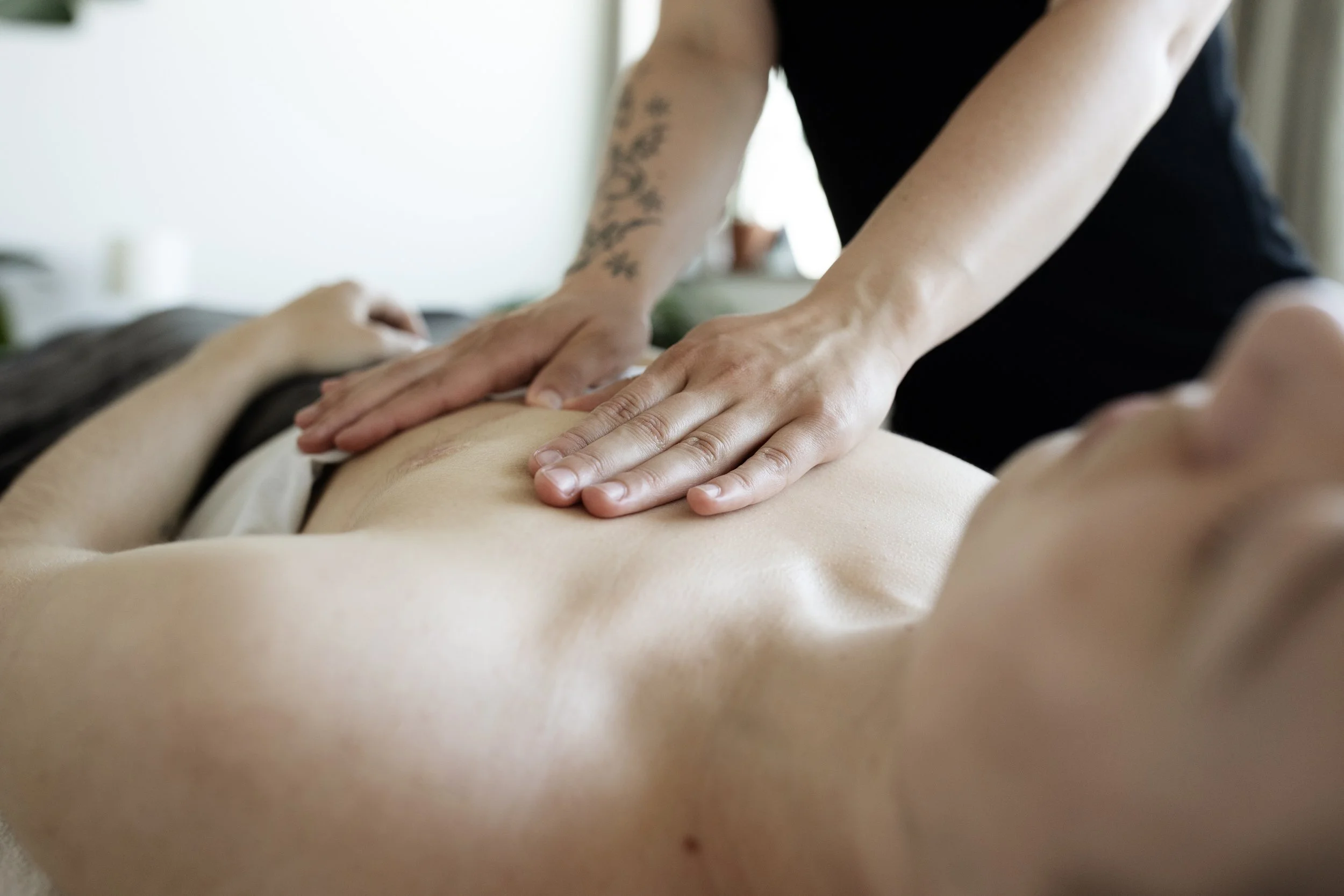
Learn more about our massage therapy services:
Many of our massage services can be booked in 60 or 90 minute sessions. 60-minute appointments are great for 2-3 areas of focus, while 90-minute appointments can cover 3-4 main areas.
HEADACHE AND/OR JAW TENSION MASSAGE
This new patient session is specifically focused on the scalp, jaw, neck, shoulders, and chest to address issues like tension headaches, migraines, TMJ dysfunction, and jaw pain and tension. Utilizing neuromuscular therapy (NMT), myofascial release, and trigger point therapy, this session will focus on problem areas that can trigger headaches and jaw pain to help correct patterns and provide lasting relief.
NEUROMUSCULAR THERAPY MASSAGE
Neuromuscular therapy (NMT) is a highly specialized form of clinical massage that treats trigger points, muscle adhesions, and fascial (connective tissue) patterns to help reduce pain and tension, increase flexibility, and improve function. These appointments are not for a full-body massage, and instead are focused on specific problem areas.
This approach is most appropriate when there is a chronic postural pattern or a specific condition, repetitive stress injury, or physical trauma that needs to be treated and corrected to achieve lasting relief. NMT is also effective to support healing of scars and reduce scar pain, tension, and discomfort.
NMT sessions are not full body massage sessions, and instead use specific treatment protocols to release tight fascia, decrease trigger points, and free up areas of stuck muscle in specific regions of pain or dysfunction. Additional techniques, such as myofascial release and trigger point therapy, may be included in these sessions.
DEEP TISSUE THERAPEUTIC MASSAGE
Deep tissue massage utilizes sustained pressure using slow, deep strokes to target the inner layers of the muscles and fascia (connective tissues). This approach is most frequently used to address chronic pain and stiffness or recovery from sprains, strains, and other injuries. This helps to reduce tension in muscle and fascia, and break up dense tissue that forms following an injury. These sessions can be full body or focused on specific areas of pain or dysfunction. Additional techniques, such as trigger point therapy, may be included in these sessions.
RELAXATION MASSAGE
Relaxation massage utilizes Swedish massage techniques and light pressure to target superficial layers of the muscles and fascia (connective tissue). This gentler approach is often used for both physical and emotional relaxation, promoting release of tension and pain related to postural patterns or emotional stress. These sessions can be full body or focused on specific areas of pain or tension.
CUPPING MASSAGE
Cupping massage combines fire cupping and massage therapy for the ultimate release and relaxation. The fusion of fire cupping with relaxation and/or deep tissue massage can help relieve stiffness, tension, pain, and stress. It can also help improve recovery from workouts or injuries.
MANUAL LYMPHATIC DRAINAGE
Manual lymphatic drainage (MLD) is a specialized form of light-touch bodywork that relieves the swelling that happens when medical treatment, surgery, illness, or other factors block your lymphatic system, resulting in sluggish lymphatic circulation and lymphedema. MLD involves gently manipulating specific areas of your body to help circulate lymph fluid, which helps reduce swelling and edema.
MLD is especially appropriate to address concerns related to:
Post-surgical swelling from oncology procedures, gender affirming surgeries, joint replacement, arthroscopic procedures, cosmetic surgery, liposuction, and more
Venous insufficiency
Fibromyalgia
Lipedema
Chronic health concerns such as long COVID, Epstein-Barr Virus, Lyme disease, or other tick borne illness
Mold exposure or environmental illness
AYURVEDIC DETOX MASSAGE (ABHYANGA)
Ayurvedic Detox Massage, or Abhyanga, is a deeply relaxing and invigorating form of Ayurvedic bodywork. This full body Ayurvedic bodywork session uses substantial amounts of oil, tailored to your constitution, and rhythmic, vigorous strokes to support increased blood flow, lymphatic circulation and tissue nourishment. It helps to stimulate the internal organs, strengthen immune system function, improve the body’s tolerance to stress, improves skin health, and promotes clarity of mind.
This session differs from Manual Lymphatic Drainage in that it uses substantial oil on the skin, and is more appropriate for general wellness support and health maintenance, as opposed to management of acute or chronic lymphedema related to post-surgical recovery or a health condition.